Iris Halili: ARE LEADERS BORN OR MADE?
“Before you are a leader, success is all about growing yourself. When you become a leader, success is all about growing others.”
— Jack Welch
Leadership begins with a simple principle: when the qualities of a leader are admired, they are first imitated and later followed.
The very concept of “followers” is rooted in this truth. In the unique partnership between leader and follower, the leader offers a model, while the followers decide whether to embrace it.
Charisma may enable a leader to step quickly into the realm of leadership. As an inborn trait, it acts as the hook that initially draws people in. Yet charisma alone cannot sustain leadership. To multiply supporters and strengthen their commitment, a leader must rely on far deeper qualities:
empathy and character, a vision that is broad and far-sighted, open and ethical communication, sound judgment
— especially in moments of crisis — courage, emotional intelligence, persistence, sacrifice, honesty, transparency, humility, service, dedication to others, flexibility, and, above all, a deeply human spirit.
These qualities are learned, not inherited. Natural gifts —a compelling presence, eloquence, charm, or confident body language — may provide an advantage, but they are never enough. They can serve as Archimedes’ lever, yet the true fulcrum of leadership rests on values cultivated through life experience.
Success, then, cannot be measured merely by how often a leader is chosen, but by the progress achieved under their direction. Consider Germany under Adolf Hitler and under Angela Merkel. Hitler, perhaps one of the most charismatic leaders in history, led his nation and the world into disaster.
Merkel, by contrast, though not known for charisma, guided Germany into an era of stability and influence, making it Europe’s most powerful nation and one of the strongest worldwide.
Peter Drucker, the father of modern management, captured this truth: “Effective leadership is not about making speeches or being liked; leadership is defined by results, not attributes.”
A leader is not a god but a mortal, embodying both virtues and flaws. No leader can possess every ideal trait. As Tolstoy observed: “There are no wholly good or wholly bad people, but only people who are more good than bad, or more bad than good.”
What ultimately matters is effectiveness — especially in times of crisis, when leaders must act with justice and foresight in service of humanity.
The true mission of leadership is to elevate others: to model integrity, inspire vision, and sacrifice for a greater cause. Leadership is not granted at birth; it is forged through choices, education, discipline, and the lifelong development of mind, character, and spirit.
This is how leaders are made.
As I wrote this book, this conviction grew stronger.
Though I did not begin with this conclusion, the deeper I explored the subject, the clearer it became: leaders are not born — they are made. In the end, the book’s title chose itself, shaped by the very purpose of the work.
——————–
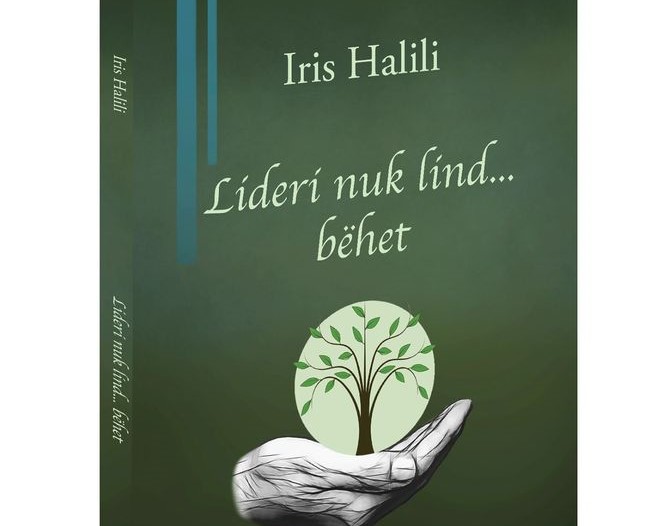
Post Scriptum
Iris Halili “Lideri nuk lind… bëhet”, Botimet Dituria
Libri ka një mesazh të thjesht, por të rëndësishëm për politikën aktuale të botës shqiptare – mbushur plot e përplot me liderë të këqij – por dhe për shqiptarët ndjekës të politikanëve, në përgjithësi – liderëve të paaftë e të korruptuar – e që na kujtojnë edhe fjalët e filozofit francez Joseph de Maistre, i cili është shprehur në vitin 1811 se, “Toute nation a le gouvernement qu’elle merite”, (“Every nation has the government it deserves.”) Secili komb ka qeverinë që meriton!
Me këtë libër, Iris Halili, sikur u thotë shqiptarëve, ndjekësve të këtyre liderëve të paaftë e të korruptuar të këtyre 30-viteve post-komunizëm — që para se të ankohen për liderët e këqij që ata i ndjekin me sy mbyllur – së pari shikoni veten në pasqyrë, sepse, “Nuk ka lider pa ndjekës” dhe “Nuk mund të ketë lider të mirë me ndjekës të këqij apo anasjelltas.”
Në këtë dinamikë marrëdhëniesh, sipas autores Iris Halili, është vetë kultura që përfaqësojnë liderët dhe ndjekësit, që luan rolin kryesor dhe është faktori qëndrestar, që më në fund, vendos se “lideri i suksesshëm nuk lind por bëhet”, sepse “ndershmëria, karakteri, dëshira apo empatia, janë cilësi që kultivohen dhe (njëherazi) përcaktojnë fatin e vet liderit apo të ndjekësve të tij.”
Libri më i fundit i Iris Halilit, “Lideri nuk lind…bëhet”, dallon për gjuhen e kthjellët dhe të qartë përmes së cilës autorja na përcjell cilësitë/tiparet që dallojnë liderët. Ky libër tashmë është kthyer për lexuesin shqiptar si një manual që në formë lakonike dhe sintetizuese rrëfen rrugën sesi çdo kush mund të bëhet një lidër i sukseshëm apo edhe një ndjekës i ndërgjegjshëm dhe përgjegjës, shkruan gazeta Dielli. Mes shembujsh konkretë nga historia botërore dhe ajo shqiptare, autorja percjell tiparet e liderve që kanë bërë histori, si për mirë ashtu edhe për keq, si dhe shpjegon se si modelet e tyre të lidershipit kanë përcaktuar fatet e ndjekësve, kombeve apo kompanive, që ata kanë drejtuar.
Autorja Iris Halili vjen me këtë botim pas një kariere të gjatë akademike dhe lidershipi si në Shqipëri ashtu edhe në SHBA. Ajo është gjithashtu e njohur, në shtypin e trojeve shqiptare dhe atë të diasporës, për artikujt e saj për lidershipin, letërsinë apo aktualitetin politik e shoqëror. Autorja ka qenë prej 10 vjetesh pedagoge e Letërsisë Moderne në Fakultetin e Letërsisë pranë Univesitetit të Tiranës; Shefe e Kabinetit e Presidentit Alfred Moisiu 2002-2005, Këshilltare e Ministrit Sokol Olldashi 2006 -2007 etj. Prej më shumë se 12 vitesh ajo jeton dhe punon në Miami, Florida. Në SHBA ka kryer doktoratën për Lidership dhe Zhvillim Organizatash, dhe aktualisht punon në profesionin e saj si Partnere Biznesi e Burimeve Njerëzore.